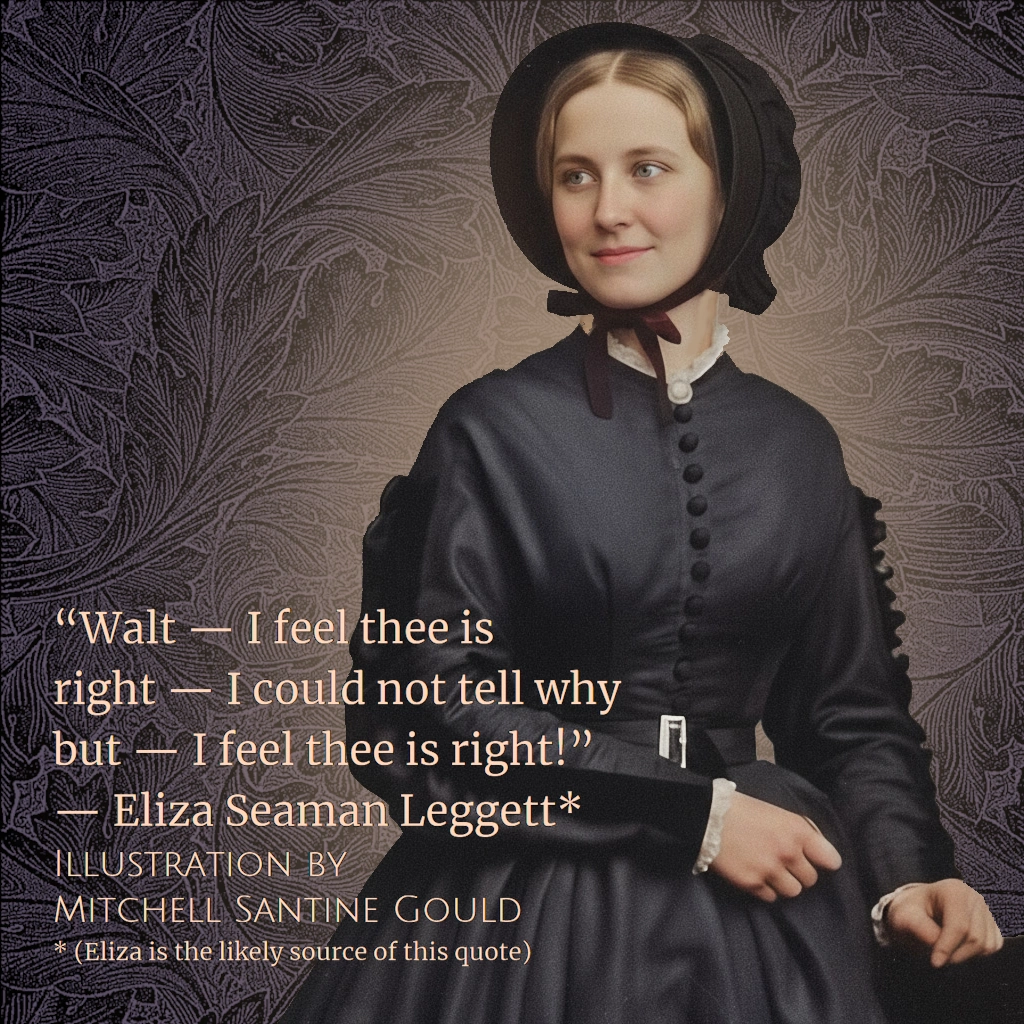
Eliza Leggett
Walt’s friend, relative of Elias Hicks’s wife, Jemima Seaman. Abolitionist, suffragist, civic reformer, literary socialite.

Walt’s friend, relative of Elias Hicks’s wife, Jemima Seaman. Abolitionist, suffragist, civic reformer, literary socialite.
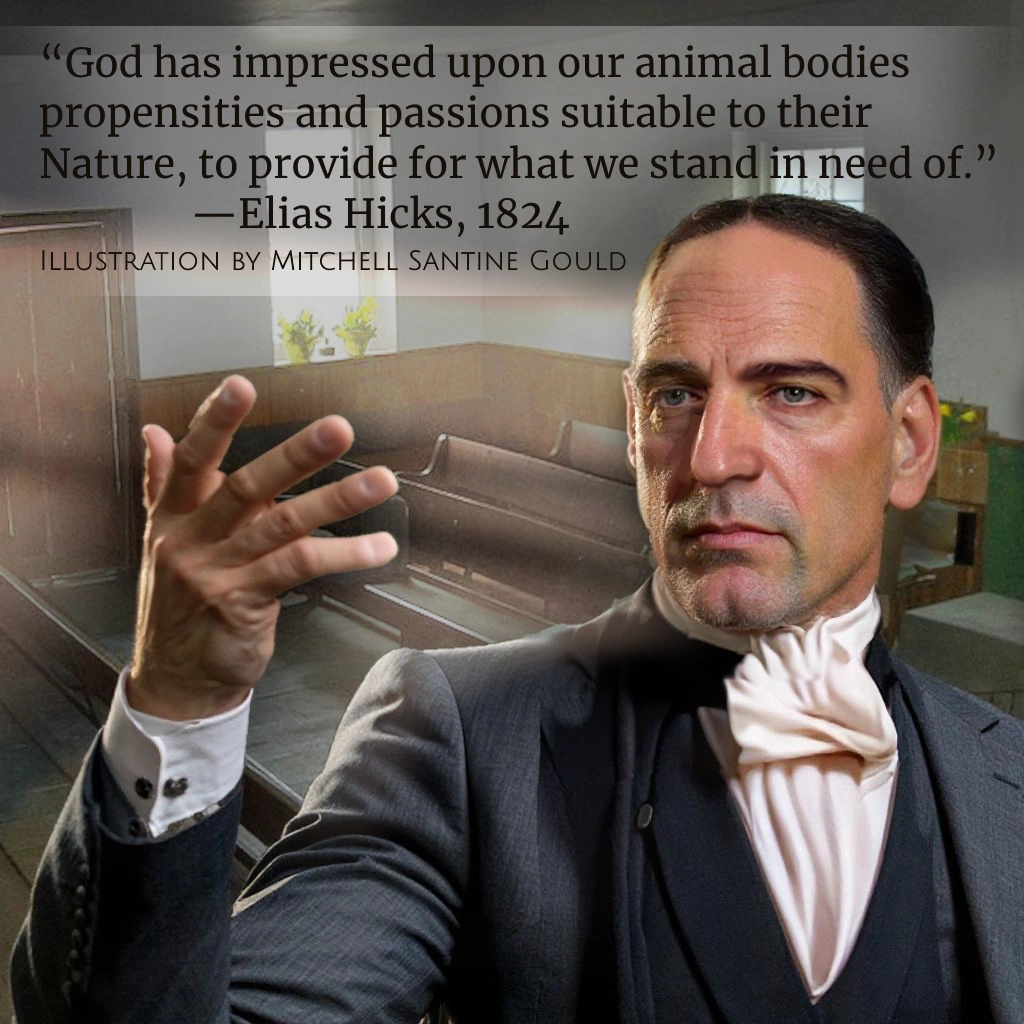
Highly influential radical Quaker theologian, interpreter of Inner Light.
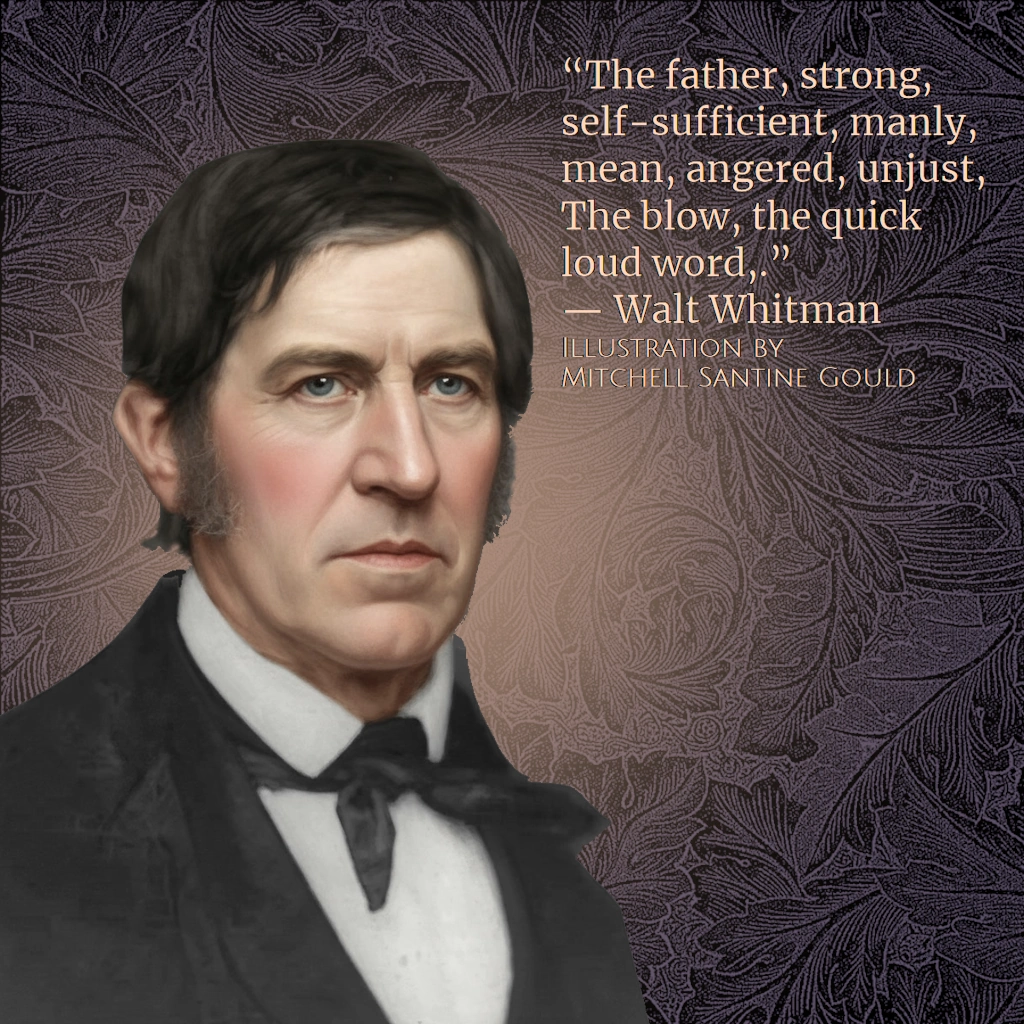
Walt’s progressive, troubled, struggling father.
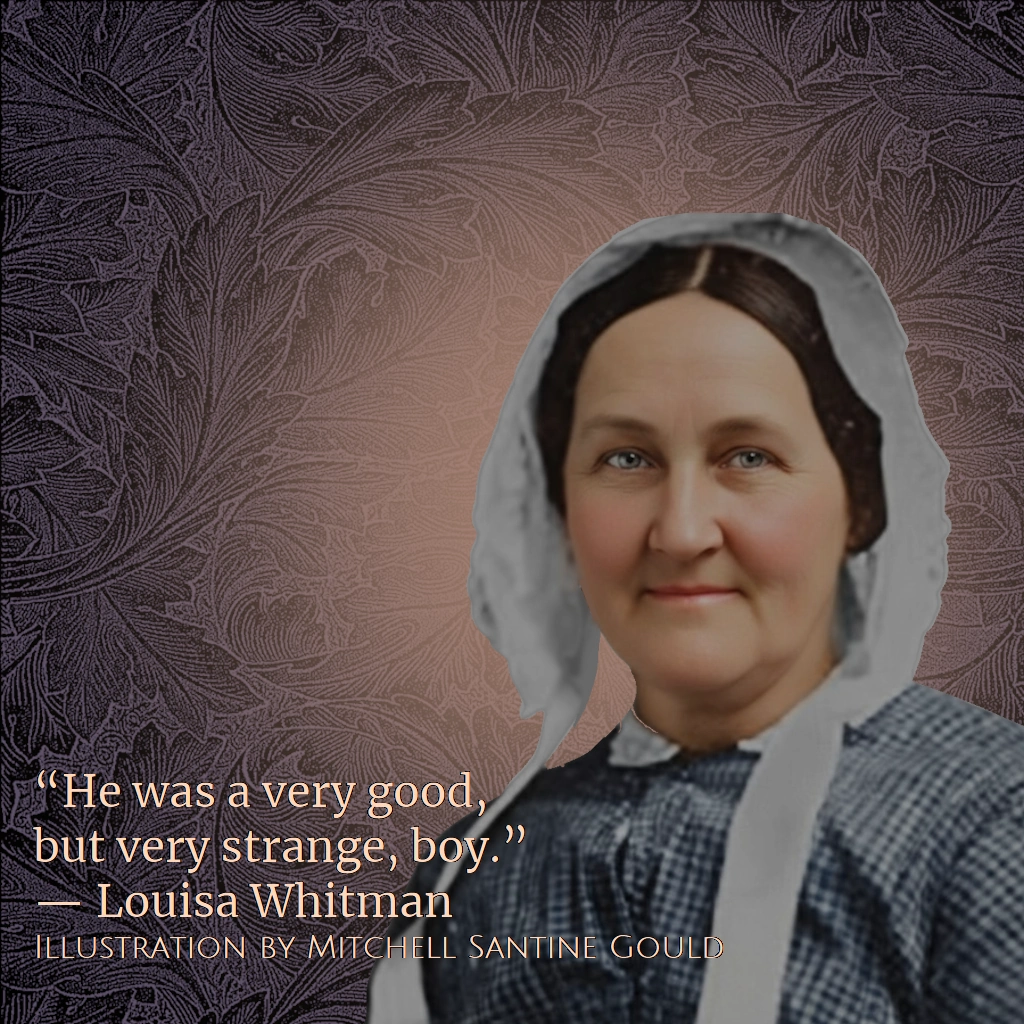
Walt’s simple, well-beloved mother.
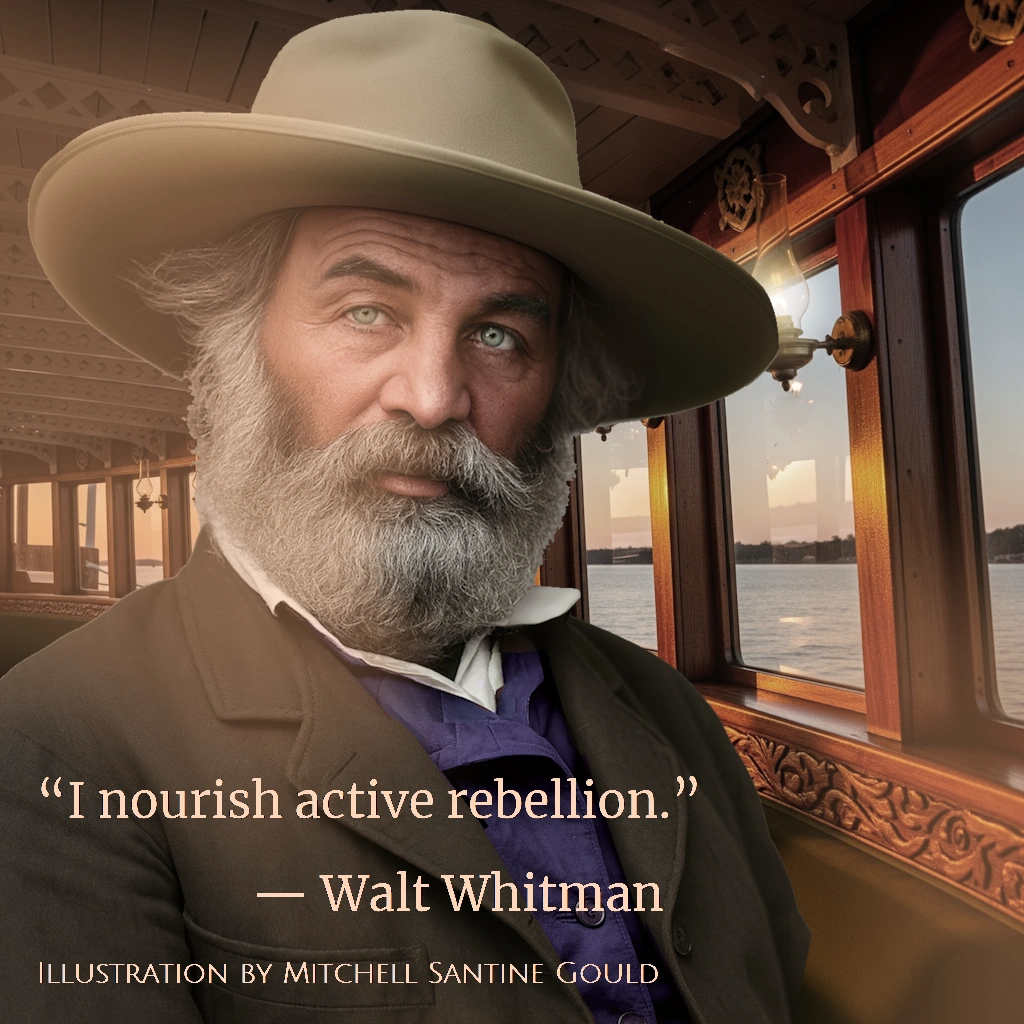
Spokesbard for New York’s Sailors, Lovers, and Quakers.
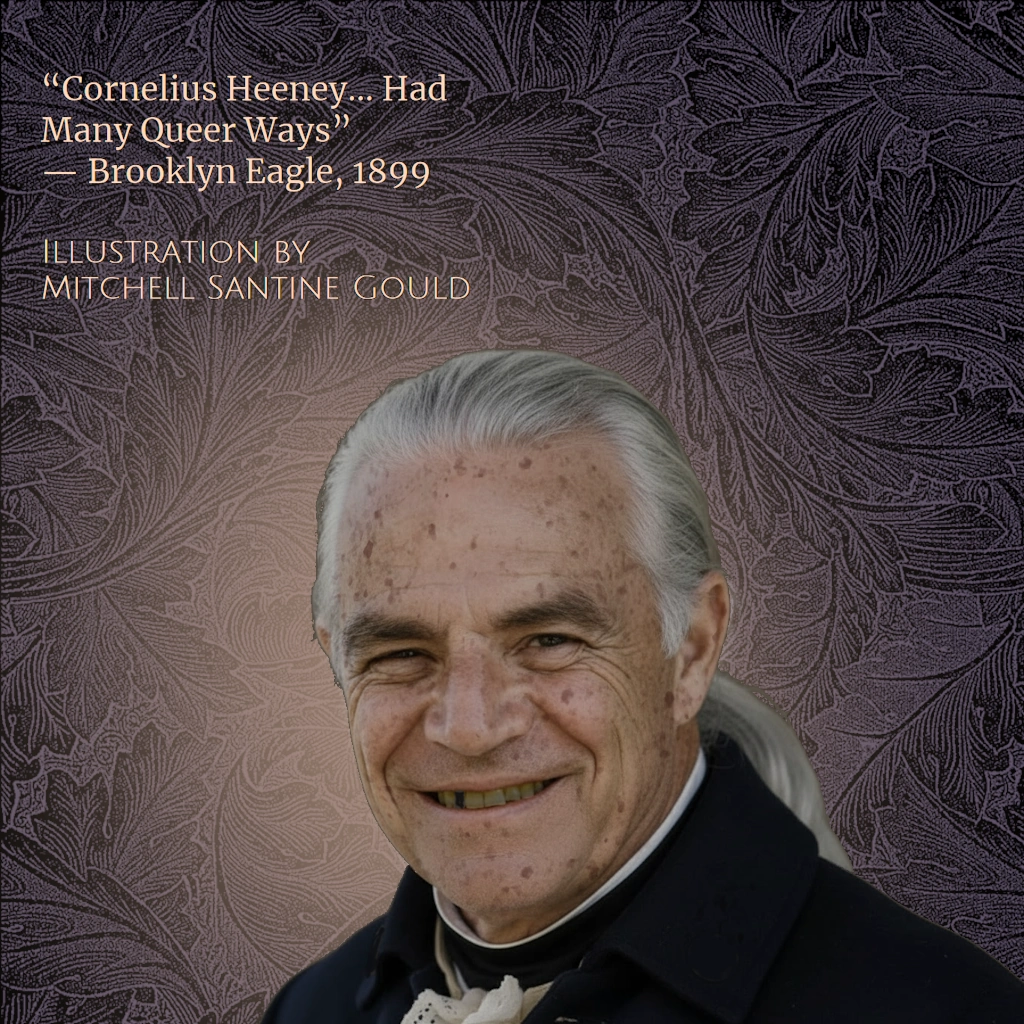
Heeney, an Irish Catholic, amassed a fortune under Quaker mentorship alongside John Jacob Astor and became a vital Brooklyn philanthropist.
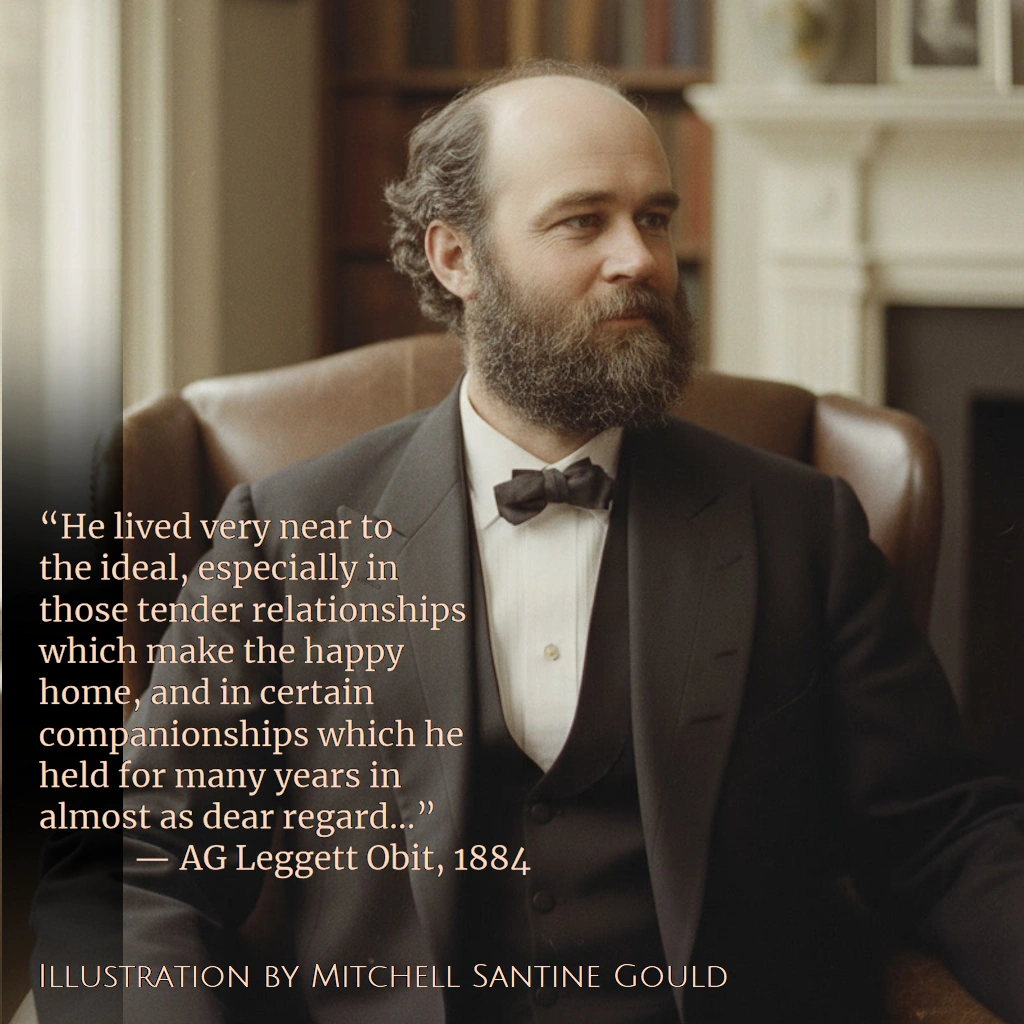
Abolitionist, journalist, farmer, husband of Eliza. This portrait is based upon Augustus’s son Mortimer, who looked like the one blurry image we have of Gus.
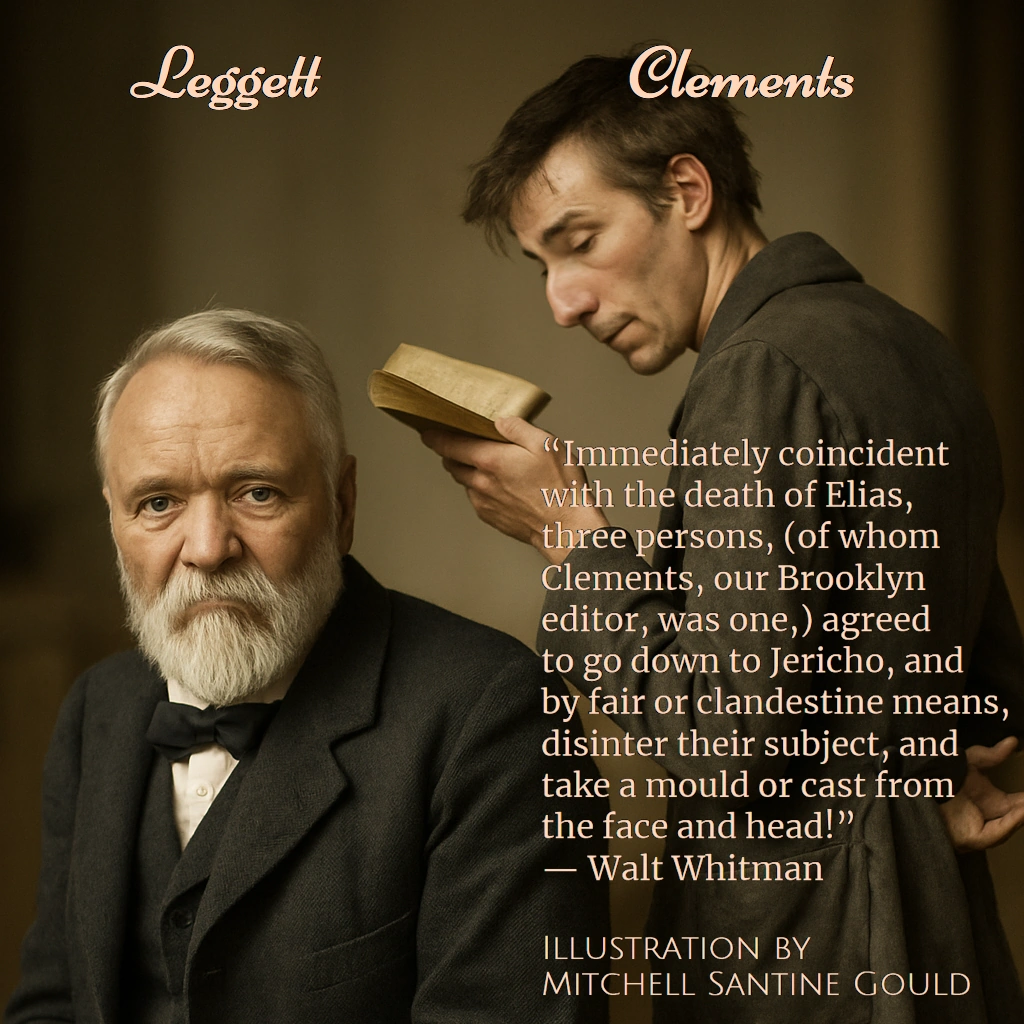
Phillip Leggett (composite character) and Samuel E. Clements (young Walt’s early employer; artist’s conception) disinterred Elias Hicks to take a death mask.
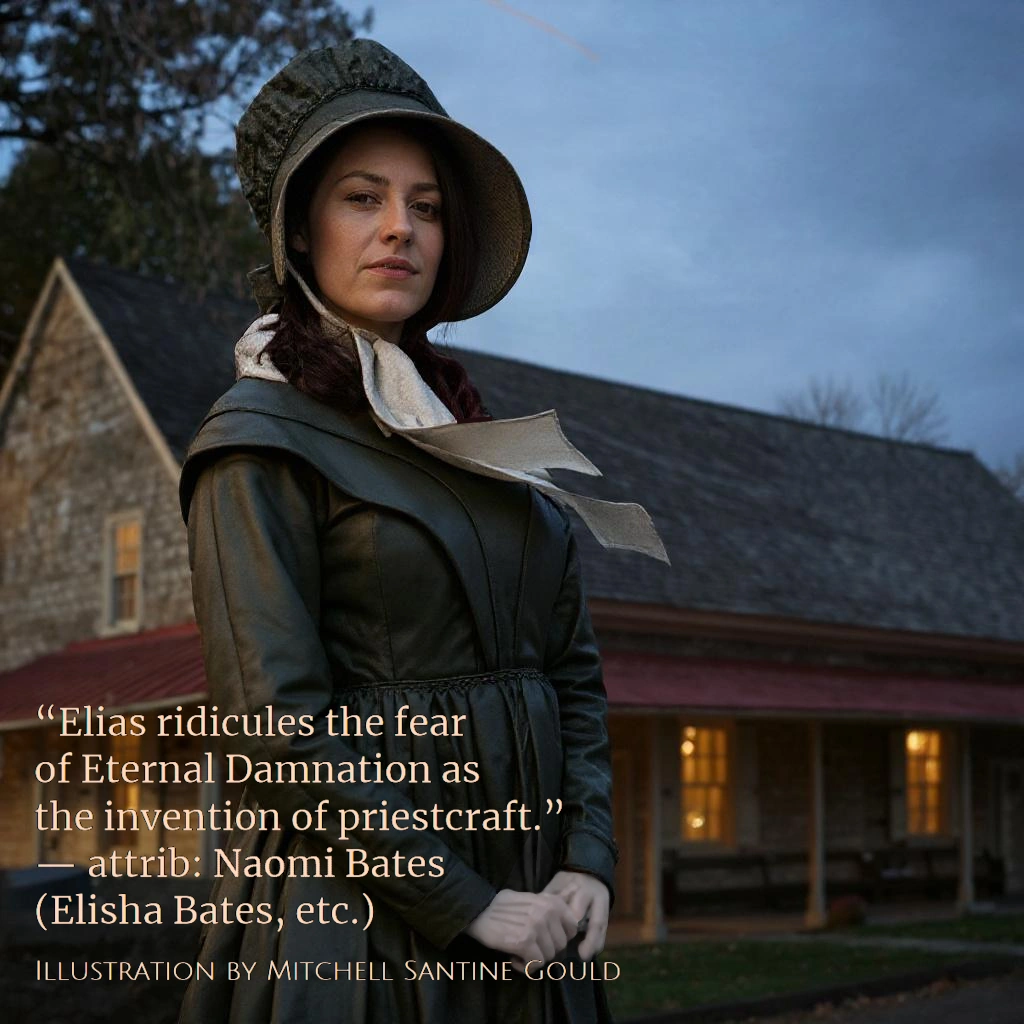
Based upon English visitors Ann Jones and Anna Braithwaite, as well as the American Elisha Bastes, Naomi is a sort of agent provocateur from London Yearly Meeting.
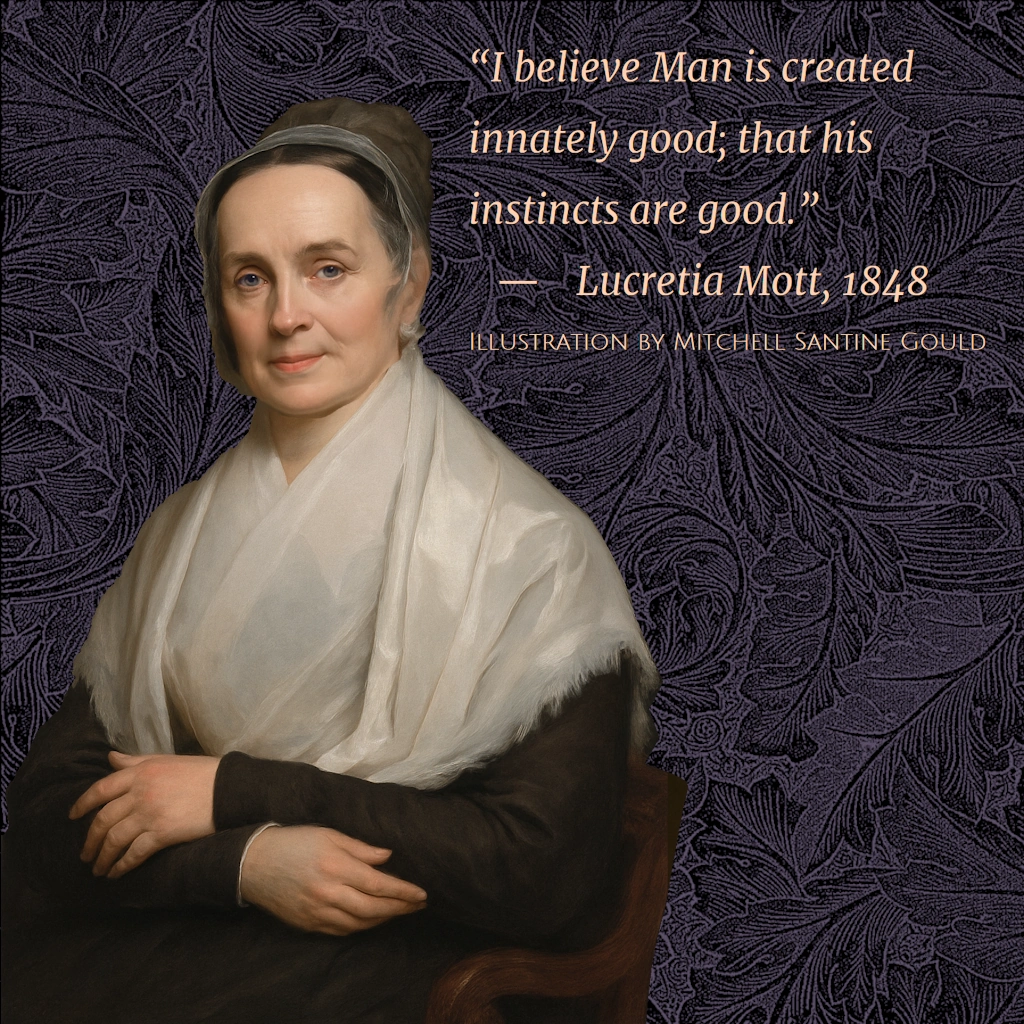
Book One portrays Lucretia’s sentiments in the Hicksite Schism, and as an exponent of responsible sexuality in her Medical School Address.
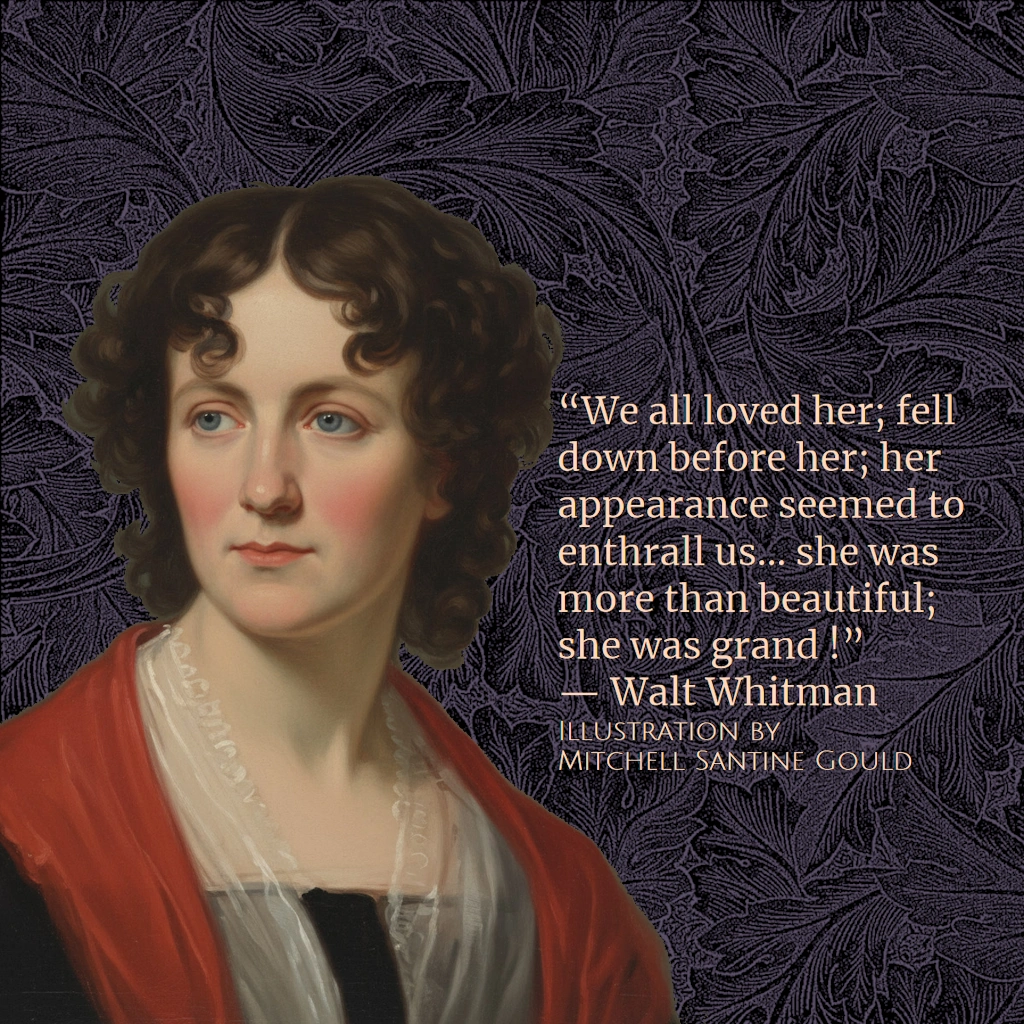
The original feminist, and among the bravest and greatest.
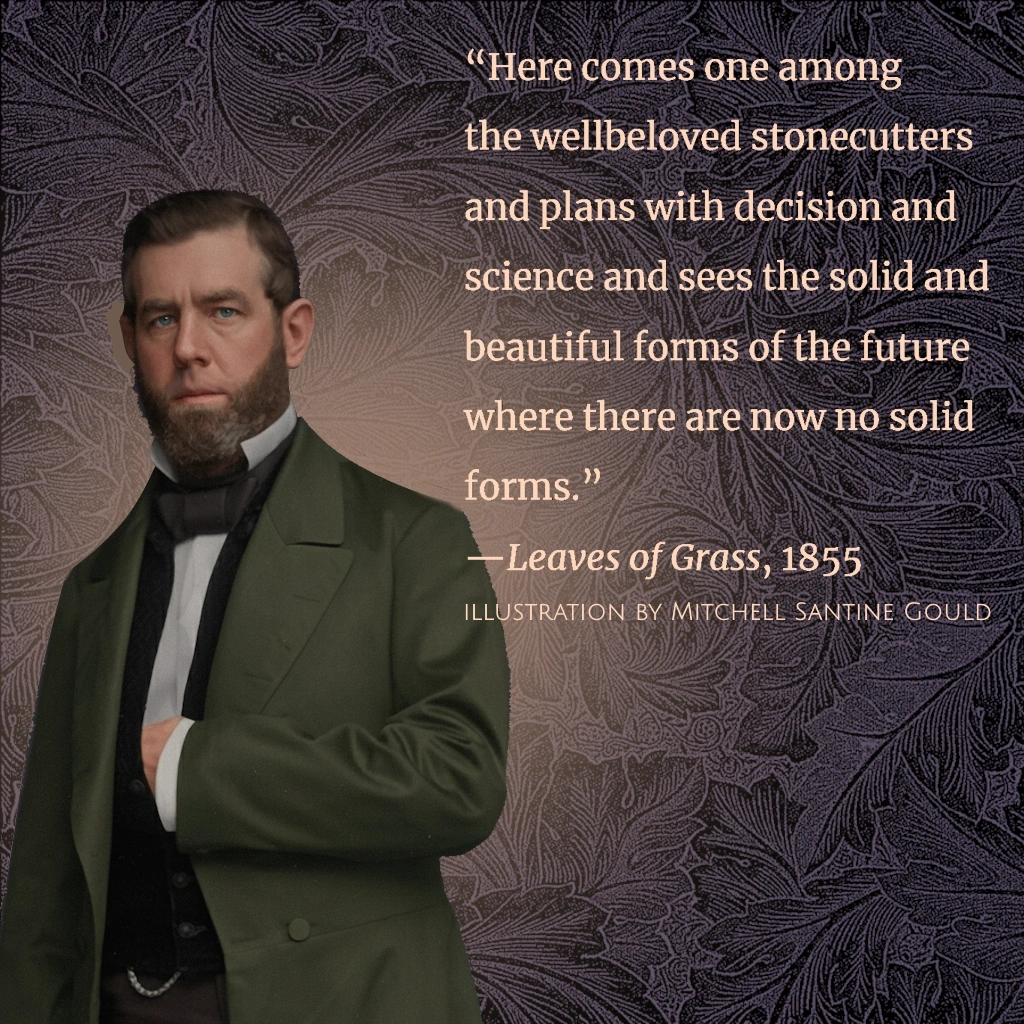
Broderick is introduced, fictionally, as a young “runner,” along with Walt and George Wilkes, in the Great Fire of 1835. He later became US Senator from California.
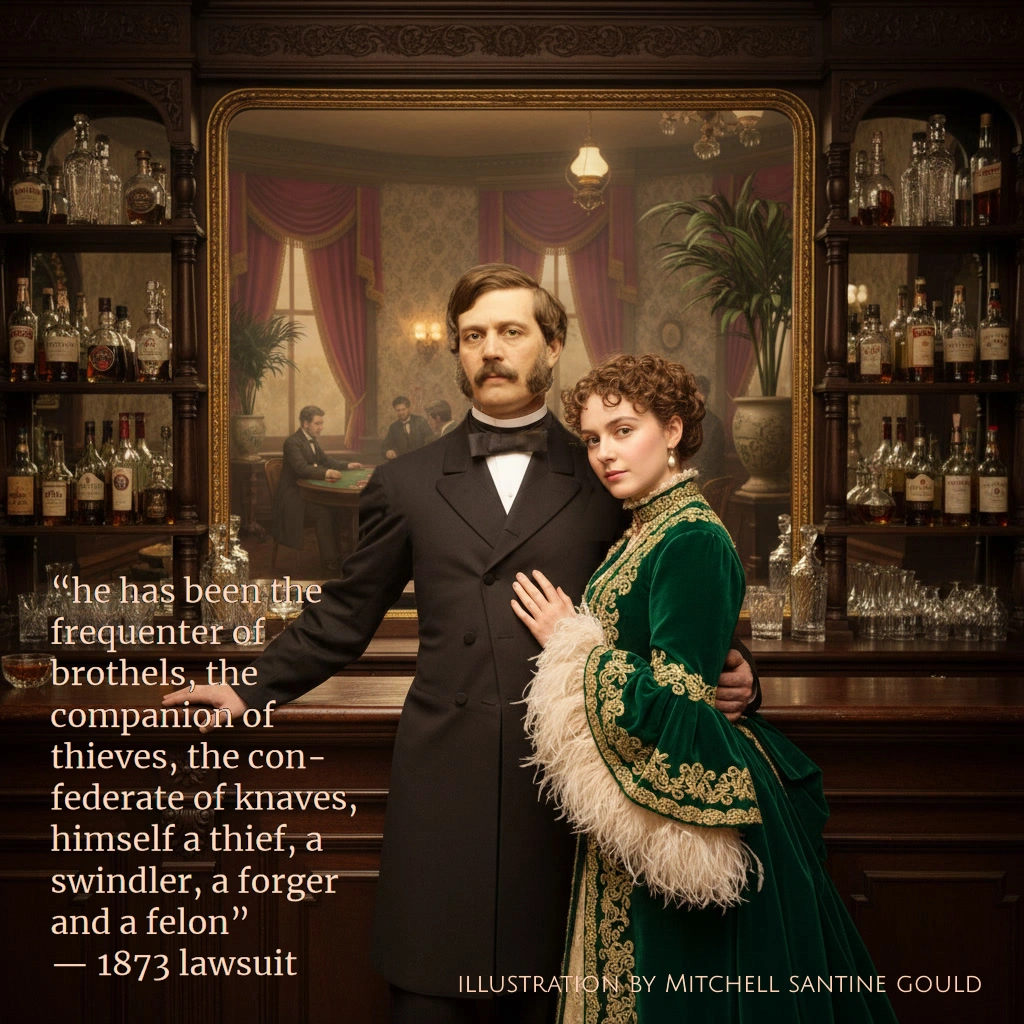
Flash journalist, fancy-man, blackmailer, political hack, and betrayer of Dave Broderick.
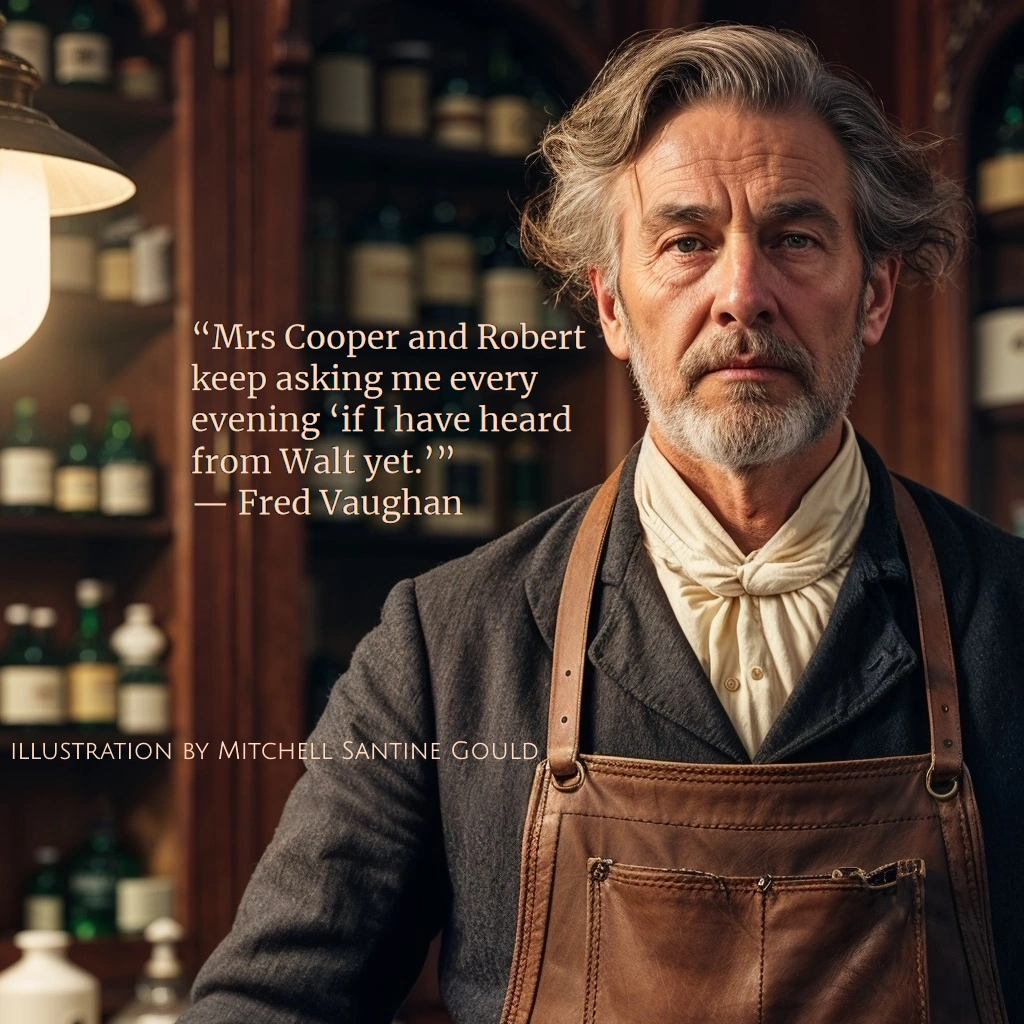
Bob, a room-mate of Fred’s, may have been the pharmacist mentioned in a New York directory of the era (artist’s conception).
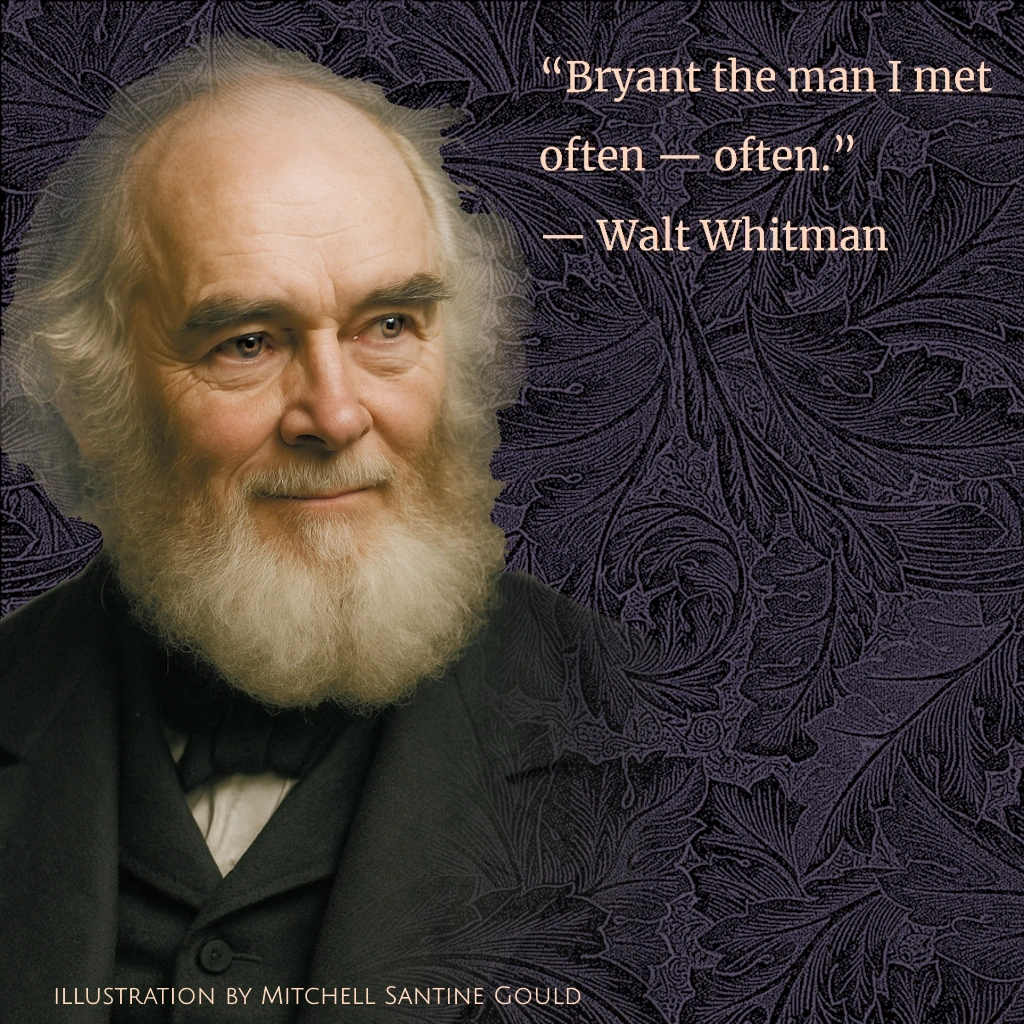
America’s favorite (American) poet and publisher of the New York Evening Post.
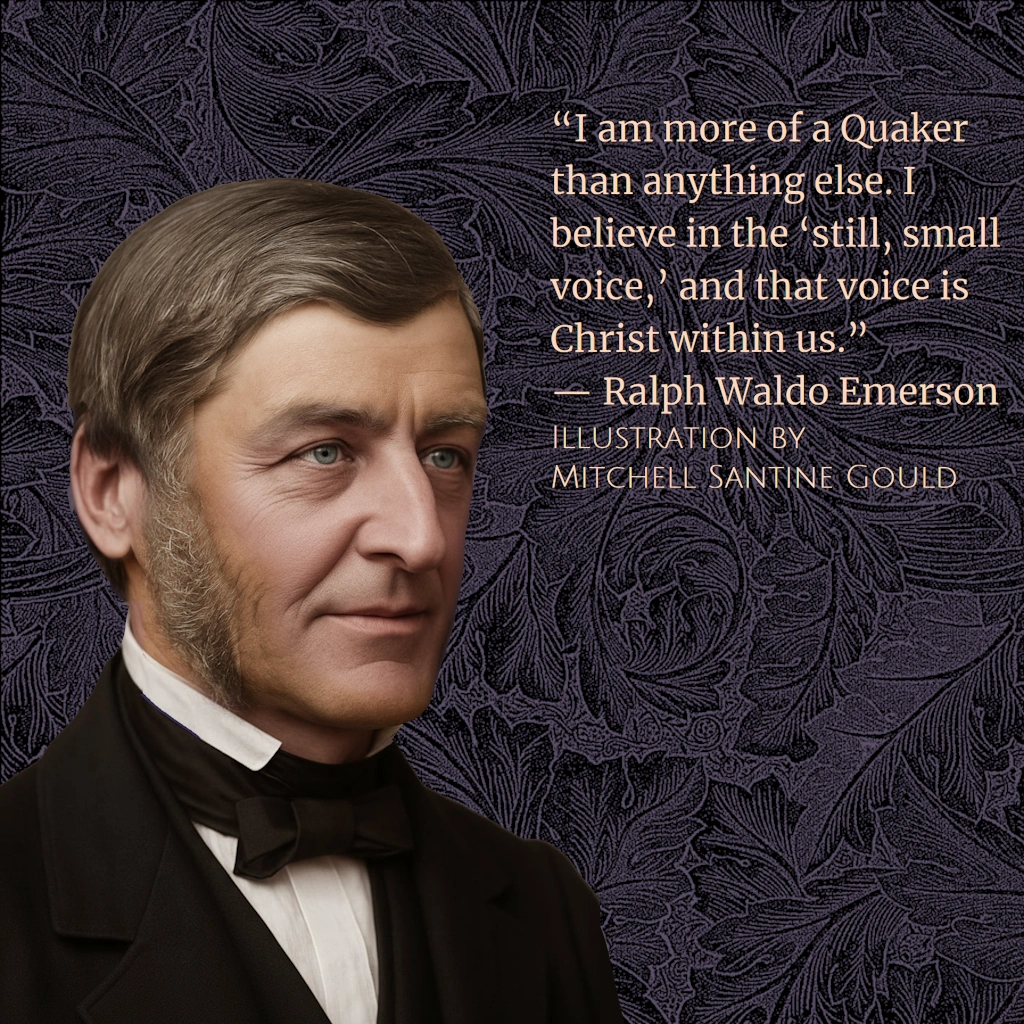
Highly influential architect of Self Reliance and The Poet.
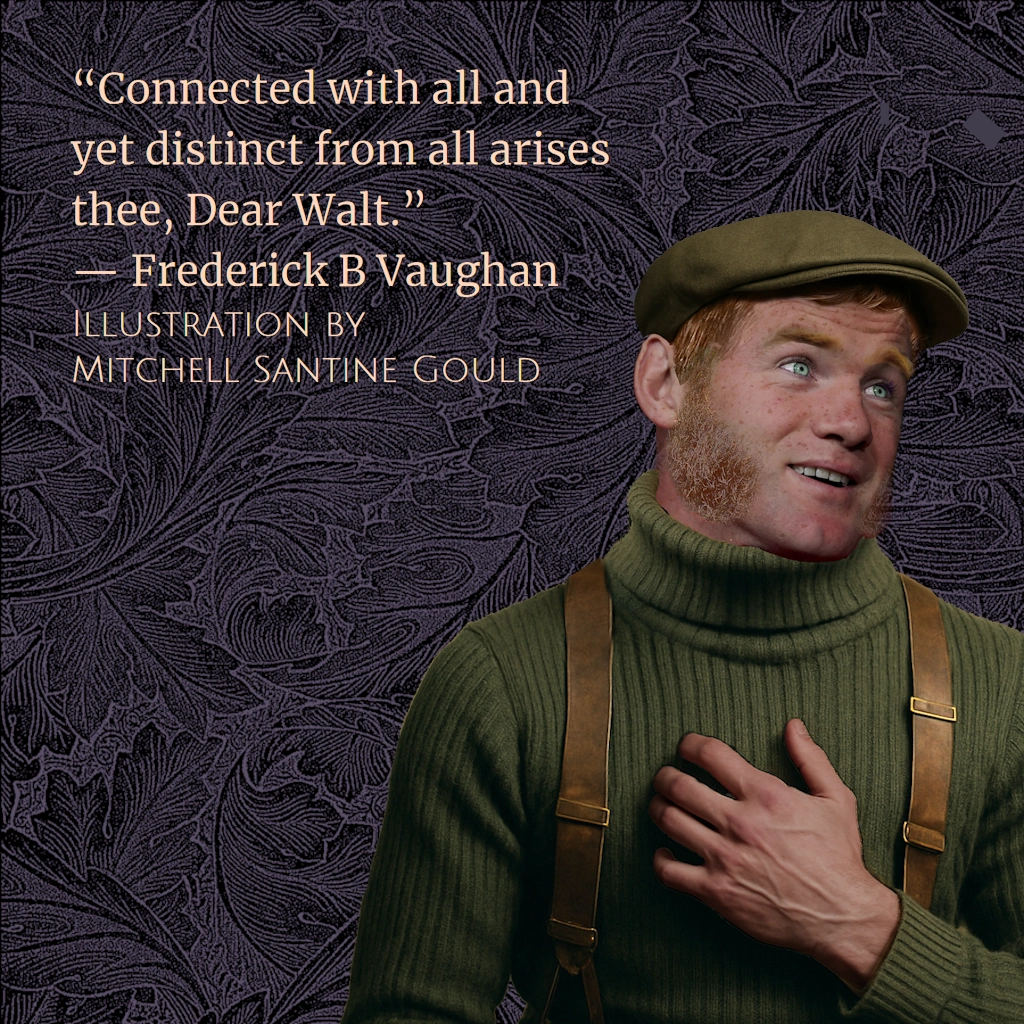
The omnibus driver who inspired Calamus and Leaves of Grass (artist’s conception).
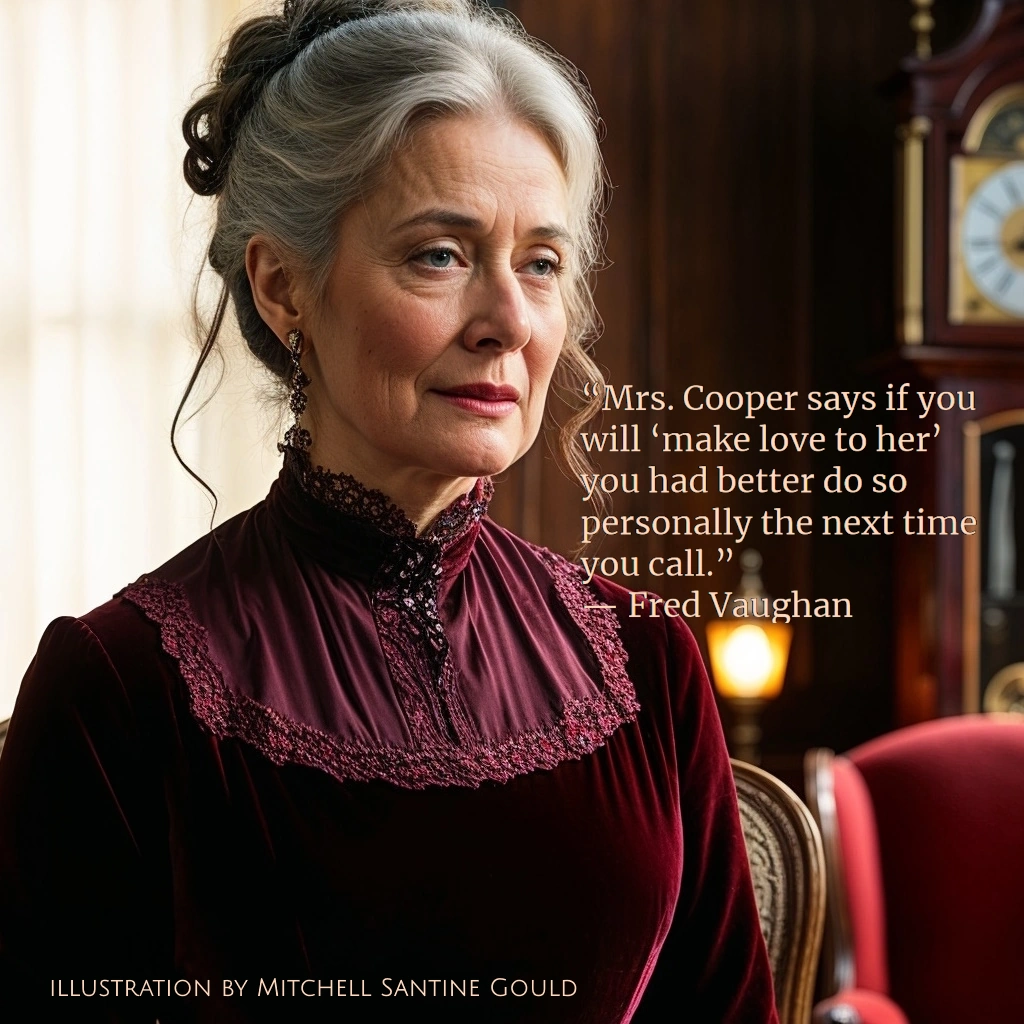
Bob’s mother (artist’s conception; fictitious name).
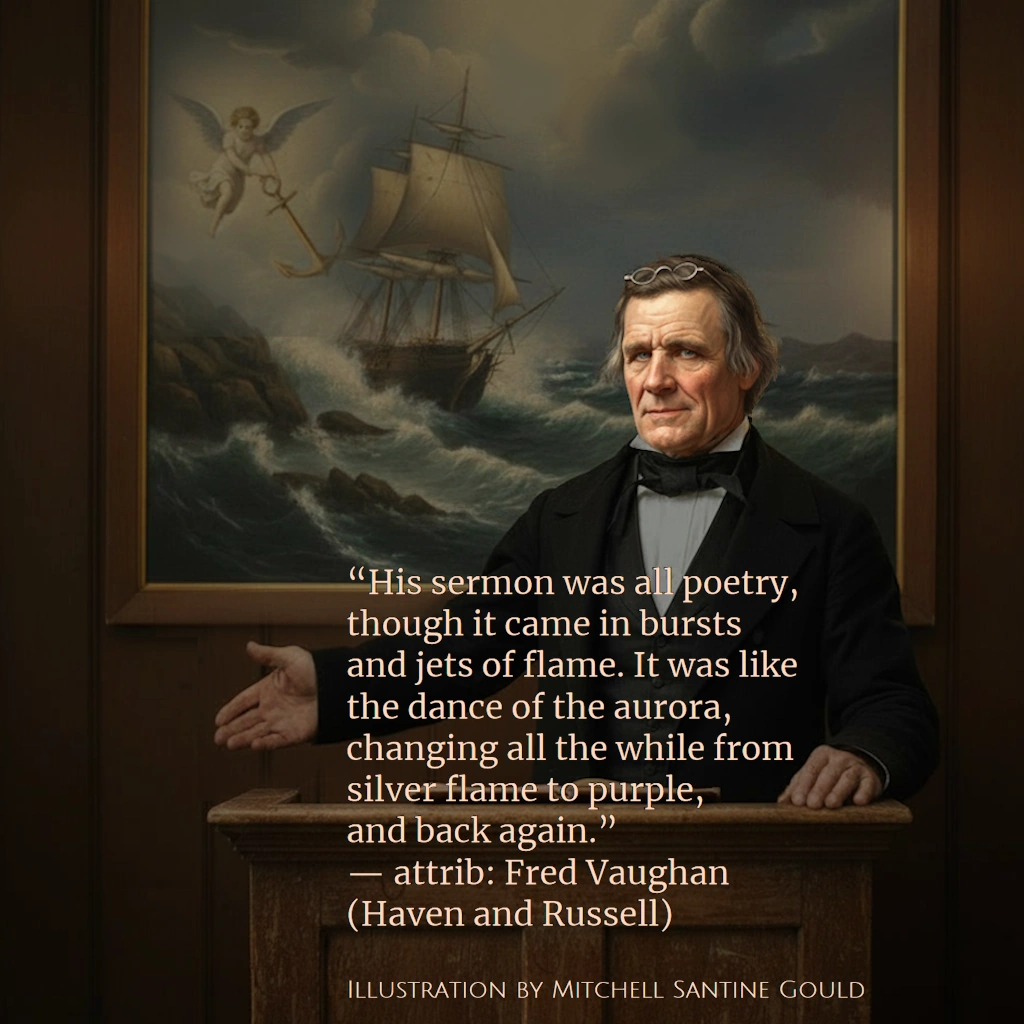
Father Taylor inspired Herman Melville, Charles Dickens, Ralph Waldo Emerson, and Walt Whitman, in addition to a legion of sailors, sea captains, and the general public.
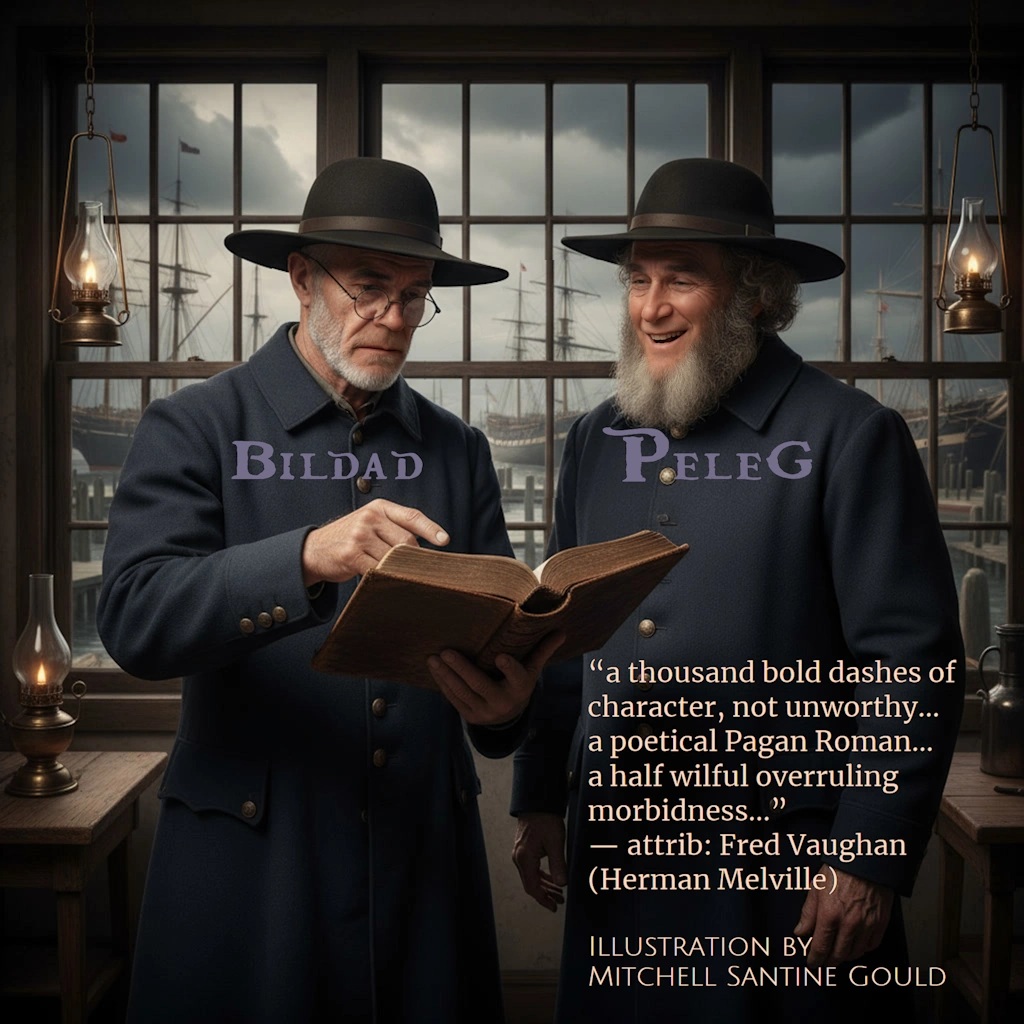
(Fictional) owners of the Barclay (also the Pequod).
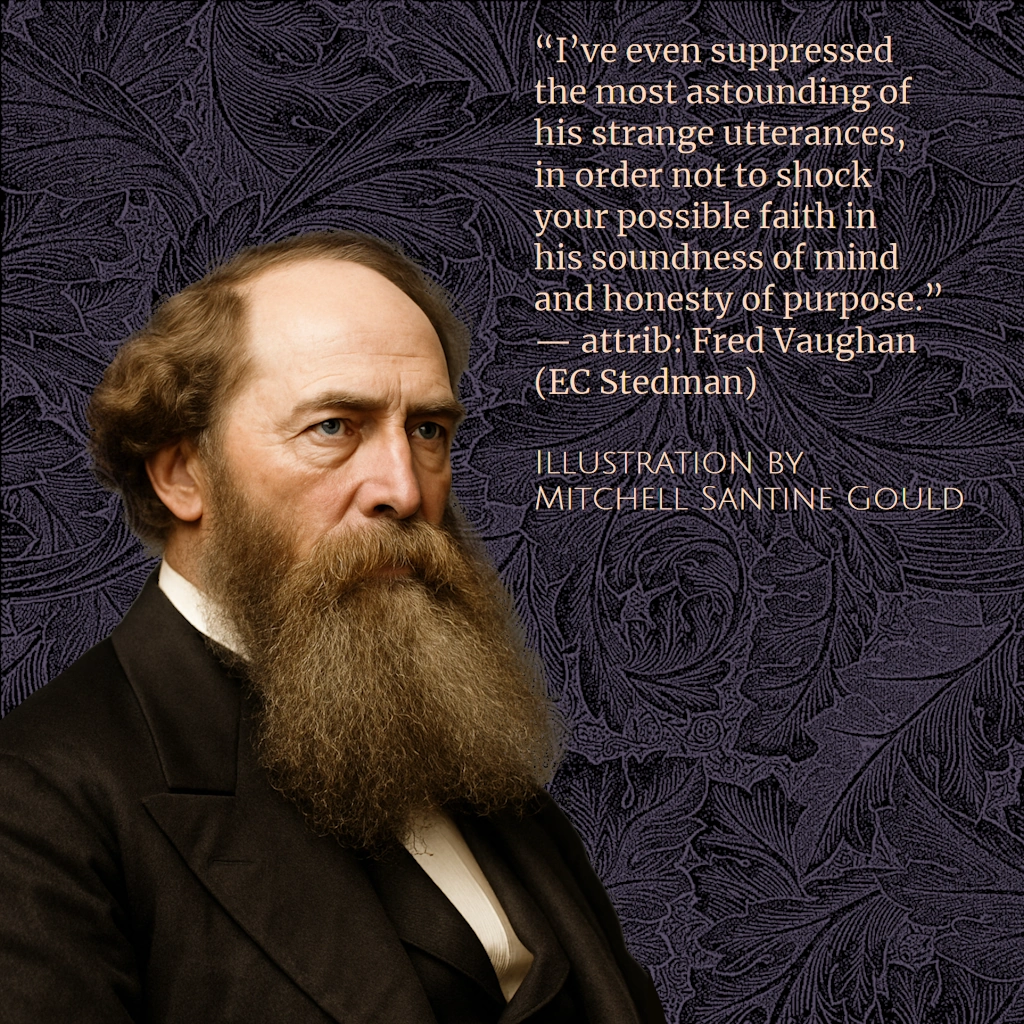
Free Love guru, associate of Henry Clapp, manager of the Unitary Home where (fictionally) Fred, Bob, and Samantha reside.
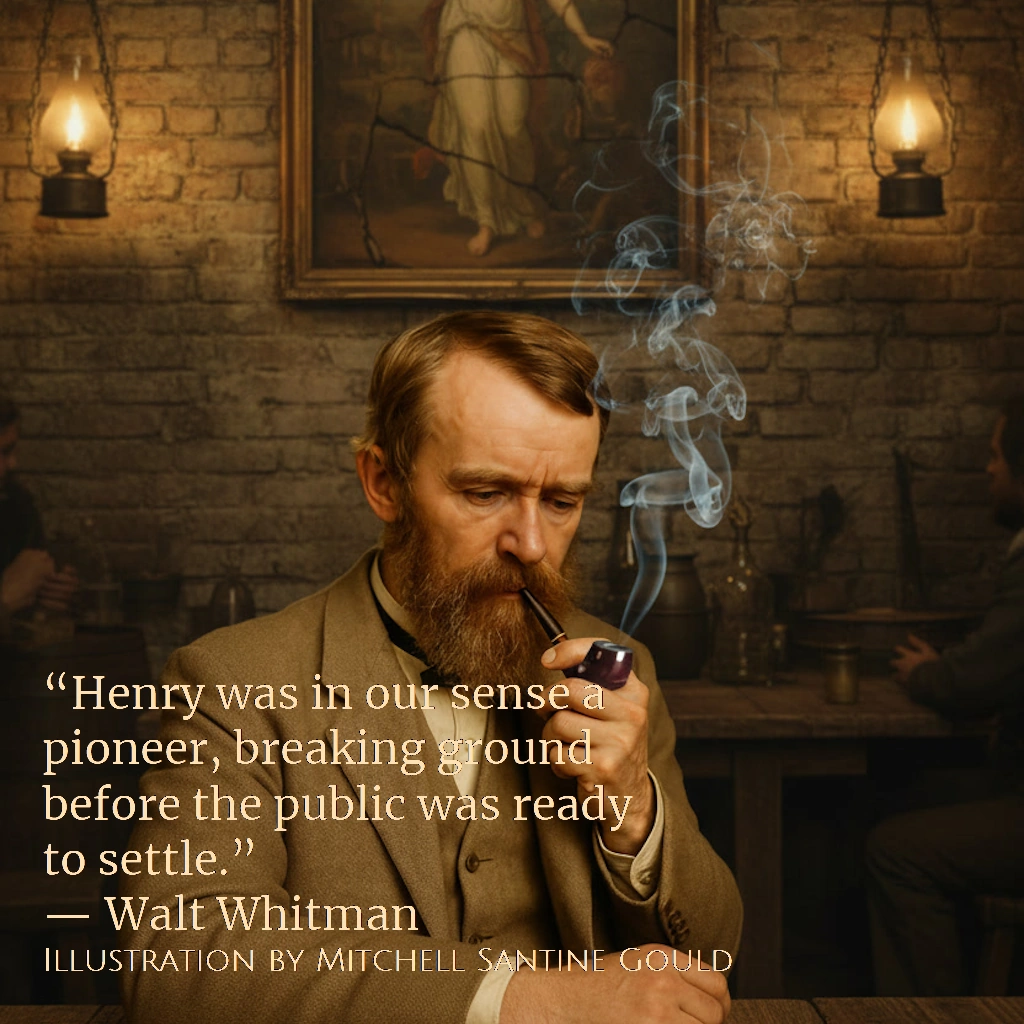
Free Love theoretician and Walt’s publicist.
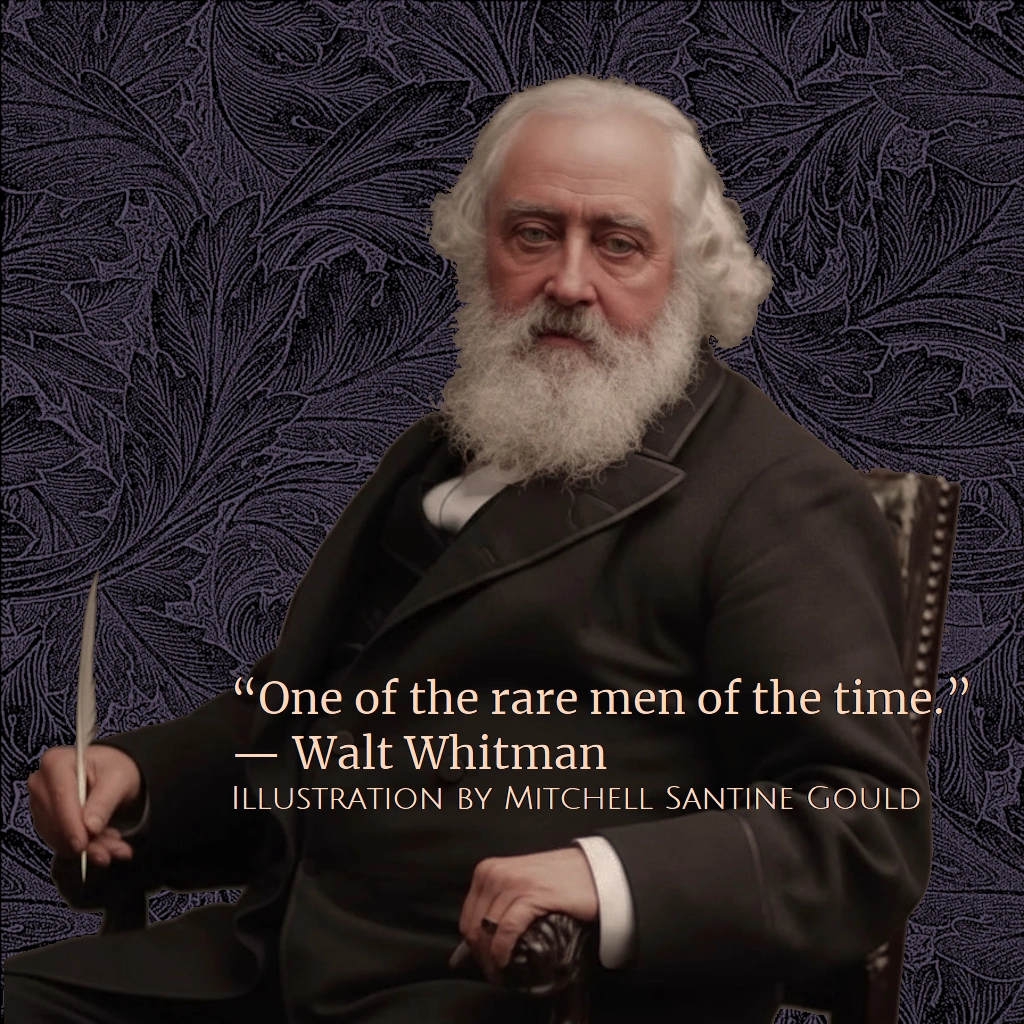
Established the long, oracular, unrhymed lines which catalyzed Leaves of Grass.
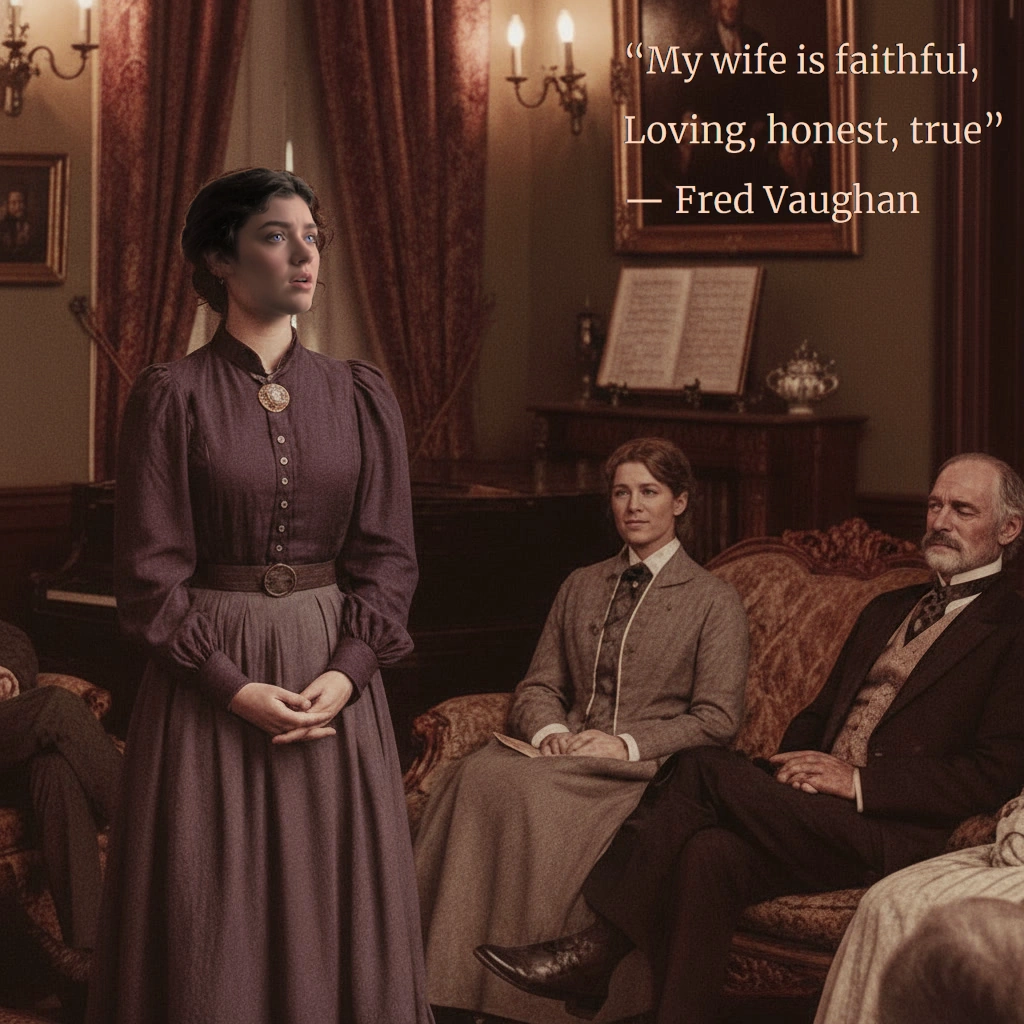
The young girl who finally became Fred Vaughan’s wife (artist’s conception).
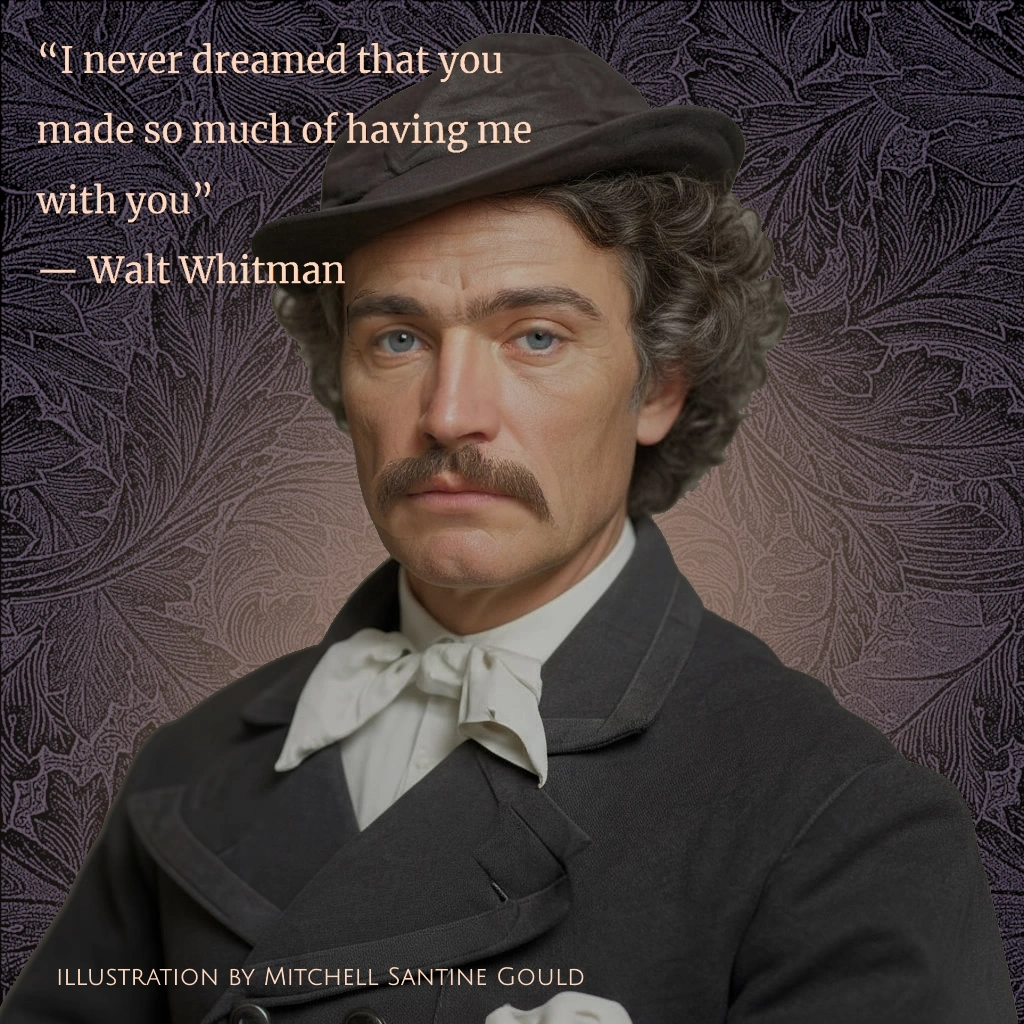
Walt Whitman’s most famous lover, or ‘camerado.’
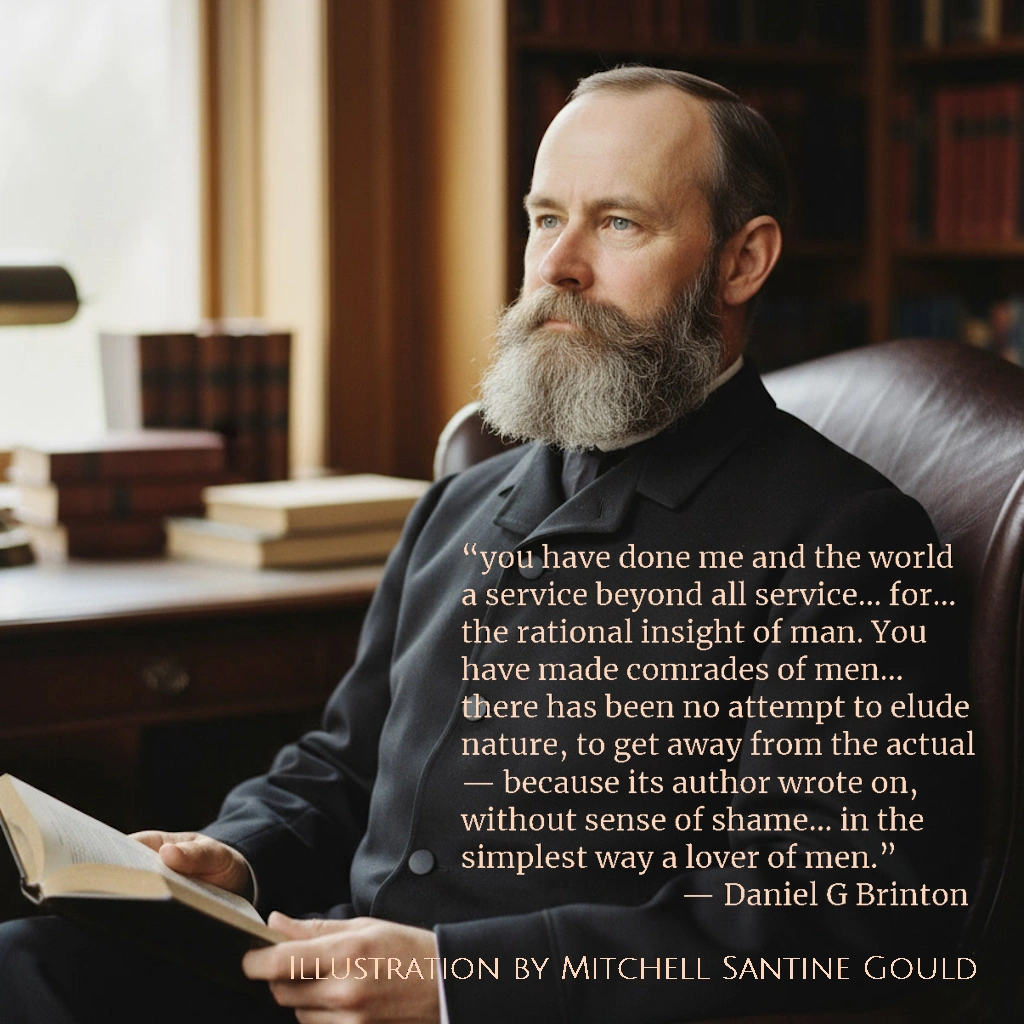
Prominent ethnologist, and first president of the Walt Whitman Association.
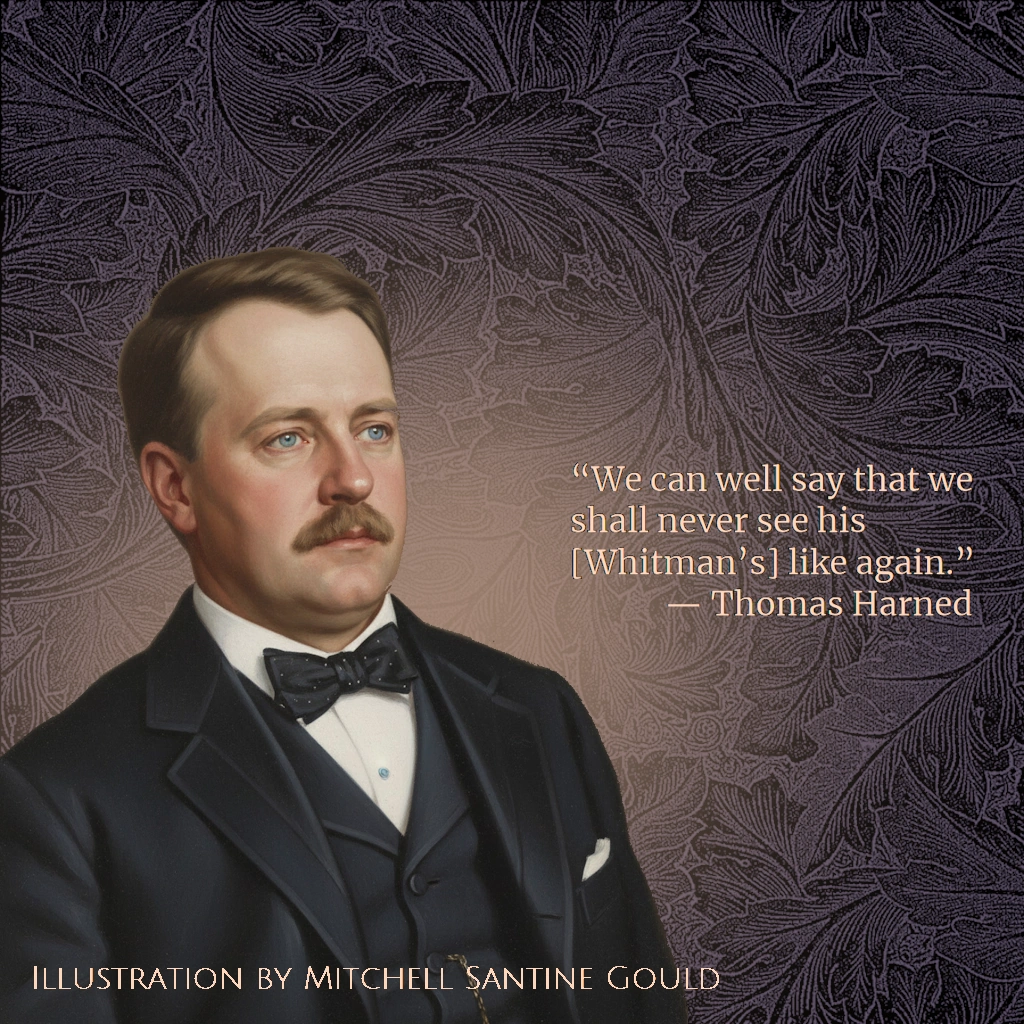
Attorney, literary executor for Walt Whitman.