Sound as Setting: Building the World with Sounds You Make by Hand
A few well-chosen noises tell listeners where they are
In a book, a writer paints a room with words: peeling wallpaper, scuffed floorboards, rain against the window.
In a play for voices, the description disappears. The ear builds the whole world from what it hears. If listeners don’t hear the room, it doesn’t exist. Yet piling on sound effects turns a scene into an obstacle course, with actors shouting over thunderclaps.
Sound isn’t decoration. It tells listeners where they are and how much time has passed, and it gives actors something physical to do.
Setting the Scene: Every Place Has a Sound
Every place sounds different. A stone cellar swallows voices in cold echoes; a wood-paneled study muffles footsteps into soft thuds. Before your characters say a word, the sound of the place tells the audience where they’re standing.
To build a setting without a narrator:
-
Start the background sound, then bring it down.
Open a scene with two seconds of a sound that marks the place: harbor whistles and gulls, or the tick of a grandfather clock. Once listeners know where they are, lower that background sound under the dialog. The mind remembers the setting; keeping the noise loud only muddies the voices.
-
Let sound tell the time.
Don’t have characters announce the hour. Let a church bell strike three, coals settle in the grate, or crickets swell when a back door opens. A change in the background sound can carry the audience from one scene to the next without stopping the story.
Sound Effects by Hand: Actions You Can Touch
As we said in the article on script format, “Foley” is just theater talk for sound effects. Recorded effects often sound flat and canned. In a live reading, sounds made right there in the room — with hands, shoes, and everyday objects — give the speech something solid to push against.
Rules for making sounds by hand:
An Example: The Sound Table for The Light in Washington
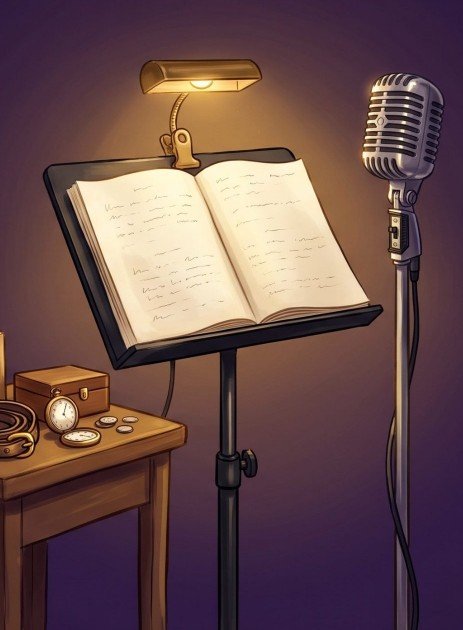
In our reading, one actor (who also plays the small part of a policeman) makes the sounds at a table set off to one side, so the effects don’t drown out the voices. After the first act, the actor playing Frances joins him there. Every hoofbeat and every turn of the brake carries Fred closer to Walt. Here is the whole kit:
- Slate and wooden blocks on a stone base, for horses’ hooves
- A weighted leather harness and brass fittings, for the jingle of the horsecar team
- A heavy ratchet and a metal crank, for the horsecar’s hand brake
- Coins dropped into a wooden box, for the fare
- A pocket watch with a spring clasp
The director and the two actors at the table borrow or improvise these pieces. Anything we have to buy comes out of the small supplies line in the budget.
From Description to Sound: Novel Habits and Stage Fixes
Turning description into sound means trading what the reader sees for what the listener hears:
| What the Scene Needs | The Novelist’s Habit | What to Do Instead |
|---|---|---|
| Bad weather and loneliness | Paragraphs about the bitter wind rattling the windows. | A draft whistling through a window frame that you notice only when the room goes silent. |
| Rising panic | Inner thoughts about a racing heart and sweaty palms. | Fumbling with an everyday object: a shaking key scraping around a lock. |
| Authority | Descriptions of a stern presence. | A heavy bag dropped on a desk, or boots pacing slowly while everyone else waits. |